
Seattle is known for innovation. Home to many vibrant industries, particularly in the technology sector, Seattle has a bustling professional community. This is clear by the many tech companies either based in Seattle or employing large numbers of people, including:
|
|
And you cannot forget Seattle’s other world-renowned companies, including, but not limited to:
|
|
No matter where you work, you worked hard to develop your craft and need to protect your income and other benefits you are due.
Seeking STD or LTD Benefits When Experiencing a Disabling Medical Condition
If you have a severe medical condition or suffer an injury impacting your ability to work, you may need to pursue short-term disability (STD) and/or long-term disability (LTD) benefits. STD and LTD benefits will cover a portion of your income if you have to stop working due to a medical condition. Most large employers provide disability insurance to their employees. Some employers may pay those benefits through payroll or a self-funded benefits program, but many are insured by large insurance companies, such as:
|
|
If your employer does not provide disability insurance, you can also purchase your own individual disability income (IDI) policy.
Know Your Rights
Do you work in tech and have a medical condition impacting your ability to perform your job? Do you need legal guidance or representation to pursue STD, LTD, or other benefits? Our experienced attorneys understand the nuances of the tech industry and its complex benefit plans, and can help you navigate the complex process of applying for benefits.
Does This Apply to You?
Contact DeBofsky Law for an attorney consultation. We will work with you to determine how we can help.
Experienced ERISA and Disability Insurance Attorneys Dedicated to Seattle Tech Professionals
You worked hard to get where you are in your career today, and it is critical you protect your income by applying for STD, LTD, or IDI benefits in the event you become disabled and can no longer work. For more information, see Seattle Disability Lawyers: Helping Claimants Get Disability Benefits in Seattle, King County, and the Surrounding Area.
Depending on your policy, your disability benefits claim may be governed by Federal law or Washington state law (or both). It is important to hire the right lawyer who knows the ins and outs of the law. For more information, see ERISA Lawyers in Seattle, Washington: Protecting Benefits in the Emerald City and Beyond.
Why Tech Workers Face Unique Disability Claim Challenges
Insurance companies classify most tech jobs as “sedentary” work. Under the U.S. Department of Labor’s Dictionary of Occupational Titles, sedentary work involves sitting for most of the day and lifting no more than 10 pounds. Insurers use this classification to argue that a disabled software engineer, project manager, or data analyst can still perform their job because they can physically sit at a desk.
This argument ignores the mental and cognitive demands that define tech work. Sustained attention and concentration, complex problem-solving, meeting deadlines under pressure, managing teams, and maintaining accuracy across thousands of lines of code are not “sedentary” tasks. A tech professional who can sit at a desk but cannot concentrate, process information, or make decisions is not able to perform their occupation.
The Dictionary of Occupational Titles has not been updated since 1991. It does not reflect the cognitive complexity of modern tech roles. In Armani v. Northwestern Mutual, the Ninth Circuit held that insurers must evaluate both physical and cognitive demands when determining whether a claimant can perform their occupation. DeBofsky Law uses this precedent to challenge sedentary classifications that ignore what your job actually requires.
The 24-Month Definition Shift
Most group disability policies change their definition of disability after 24 months. During the first two years, insurers evaluate whether you can perform your “own occupation.” After 24 months, the definition shifts to “any occupation” you are reasonably qualified to perform. This creates a second denial risk for tech workers.
An insurer may approve a software architect’s claim under the own-occupation standard because the claimant cannot code. At the 24-month mark, the insurer then argues the claimant can perform any sedentary job. DeBofsky Law prepares for this shift from the start of every claim, building vocational expert evidence that accounts for the vocational aspects of disability claims and demonstrates why generic sedentary classifications do not reflect your actual work capacity.
Building the Evidence That Wins Tech Disability Claims
Neuropsychological Evaluations
A neuropsychological evaluation is the most effective tool for documenting cognitive disability in tech workers. The evaluation typically takes four to six hours and includes standardized tests measuring attention, memory, processing speed, executive function, and problem-solving ability. Results are reported as scaled scores that insurers and courts can compare to the cognitive demands of your occupation.
For tech professionals who performed at a high level before disability, the evaluation captures the gap between pre-disability cognitive capacity and current function. A software engineer who now scores in the average range may appear “normal” on paper, but the drop from superior to average function can make complex technical work impossible.
Cardiopulmonary Exercise Testing (CPET)
CPET measures your body’s ability to sustain physical and cognitive effort over time. For tech workers disabled by Long COVID, chronic fatigue syndrome, or fibromyalgia, CPET provides objective data showing that sustained work is not medically feasible. Insurers cannot dismiss CPET results as subjective or self-reported.
Functional Capacity Evaluations
A functional capacity evaluation measures your physical abilities through standardized testing. An FCE strengthens your claim by providing objective measurements of what you can and cannot do. The federal courts give significant weight to FCE results because they are based on observable, measurable performance rather than self-reported symptoms.
Vocational Expert Assessments
Medical evidence proves what you cannot do. Vocational evidence proves why those limitations prevent you from working. An independent vocational expert analyzes your specific job duties, education, training, and transferable skills against your documented medical restrictions. This analysis directly counters the insurer’s attempt to classify your role as generic sedentary work.
When an insurer denies your claim for insufficient evidence, the combination of neuropsychological testing, CPET, FCE, and vocational expert analysis builds a record that is difficult to dismiss.
How Complex Compensation Affects Your Disability Benefits
RSU vesting schedules create an additional risk. When disability prevents you from working, unvested stock units may be forfeited. The financial impact of disability extends beyond lost wages to include lost equity that would have vested over the coming years.
Individual Policy Strategy for High Earners
Many tech executives carry individual disability insurance alongside their employer group coverage. Individual policies fill the gap that group LTD leaves. They often provide own-occupation coverage for the life of the policy, rather than shifting to any-occupation at 24 months.
Individual policies purchased directly by employees are not governed by ERISA. They fall under Washington state law, which offers broader remedies including bad faith damages, treble damages under the Insurance Fair Conduct Act, and the right to a jury trial. DeBofsky Law represents clients on both group and individual claims, coordinating strategy across both policies to maximize recovery.
Employee Benefits Beyond Disability for Seattle Tech Workers
Group Life Insurance and Accidental Death Benefits
Most large Seattle employers provide group life insurance and accidental death and dismemberment (AD&D) coverage as standard benefits. When insurers deny these claims or dispute the cause of death or injury, the same federal and state laws that govern disability claims apply. DeBofsky Law handles life insurance and AD&D disputes alongside disability cases.
Denied Medical Treatment Coverage
Health insurers deny coverage for treatments they classify as experimental or investigational. Tech workers seeking specialized care for complex conditions often face these denials. Health insurers deny coverage under employer-sponsored plans governed by ERISA, which limits the remedies available unless the claim falls outside ERISA. DeBofsky Law challenges these denials through the administrative appeal process and, when necessary, in court.
The Counsel You Need to Fight for Your Benefits Denial as a Tech Professional
Hiring counsel when applying for STD, LTD or other benefits can maximize your chances of success and damages. Experienced benefits counsel can advise you through every step of the process, educate you on the specific terms of your plan, and familiarize you with the business practices of the large insurance companies. The skilled benefits attorneys at DeBofsky Law can help you navigate the complicated process of applying for benefits and represent you if you need to submit an appeal or go to court to protect your benefits. Contact us today!

Frequently Asked Questions About Disability Claims for Seattle Tech Professionals
What is the hardest disability to prove?
Cognitive impairment without visible physical symptoms is among the hardest disabilities to prove. Tech workers disabled by conditions such as traumatic brain injury, Long COVID, fibromyalgia, depression, or chronic fatigue often face denials because their limitations are not apparent in a standard medical exam. Insurers classify tech roles as sedentary and argue that if a claimant can sit at a desk, they can work.
DeBofsky Law overcomes this challenge by building a multi-layered evidence strategy. Neuropsychological evaluations document cognitive decline through standardized testing. CPET testing provides objective fatigue measurements. Vocational expert assessments prove that the claimant’s documented limitations prevent them from performing the actual cognitive demands of their occupation, not just its physical requirements.
What evidence should I gather for an LTD appeal in Seattle?
A strong LTD appeal requires both medical and vocational evidence. On the medical side, gather updated records from all treating physicians, a detailed narrative report from your primary treating doctor linking your diagnosis to specific functional limitations, and consider neuropsychological testing if your disability involves cognitive impairment. CPET testing can document fatigue-related limitations that standard medical records do not capture.
On the vocational side, an independent vocational expert assessment connects your medical limitations to the specific duties of your occupation. A functional capacity evaluation provides objective measurements of what you can and cannot do physically. DeBofsky Law coordinates this evidence-gathering process to ensure every piece supports your claim before the appeal deadline.
Do contingency fee arrangements work for ERISA disability cases in Seattle?
Yes. DeBofsky Law offers contingency fee arrangements for many ERISA disability cases. Under a contingency fee arrangement, the firm collects its fee only when the claim succeeds. Contingency fees are calculated based on benefits received when the claim resolves, not on future benefit payments. Not every case is suited for a contingency arrangement. DeBofsky Law also offers hourly and fixed fee options depending on the complexity and circumstances of the case. Learn more about how we structure fees.
ERISA also allows courts to award attorney fees to successful claimants for time incurred during the pendency of a lawsuit. DeBofsky Law pursues fee-shifting when available so the insurer, not the claimant, bears the cost of legal representation.
Should I consult a Seattle attorney before filing a disability appeal?
Yes. The claim appeal is your last chance to add evidence to the record in most ERISA cases. Federal courts generally limit their review to the evidence that was in the administrative record. If critical evidence such as a neuropsychological evaluation or vocational assessment is missing from your appeal, the court cannot consider it later.
Consulting an attorney before filing the appeal allows DeBofsky Law to identify what evidence is needed, coordinate testing with the right specialists, and build the strongest possible record before the deadline passes.
Understanding Legal Fees for Tech Industry Benefit Claims
Tech professionals often carry complex benefit packages, including both group employer-sponsored plans and individual policies. DeBofsky Law offers hourly, contingency, and fixed fee arrangements depending on the type of claim and its complexity. With a contingency fee arrangement, you owe nothing for our services unless your claim succeeds. We base contingency fees on benefits received when the claim resolves, not on future benefit payments. We discuss fees during your initial consultation and explain which arrangement fits your situation. Learn more about how we structure fees.

“It’s a joy to have the process over and a favorable decision issued.”
“Mark – Thank you so much, to you and the team that worked on my case. It has taken me a little bit of time to believe the good news. It’s a joy to have the process over and a favorable decision issued. I am much appreciative of the work and guidance you provided. I felt reassured from our first phone call and more so each time I saw the effort and expertise you brought to my case. Thank you again!”
T. H., Seattle, WA | Client
Learn More About SDT, LTD, and Medical Conditions that Impact Technical Workers and to Protect Your Rights

8th Circ. Ruling Raises Bar For Seeking Disability Benefits
The U.S. Court of Appeals for the Eighth Circuit recently underscored the difficulty of securing Social Security disability benefits. In Post v. Bisignano, the court affirmed the denial of benefits to a claimant whose hand, arm and shoulder impairments had required...

The Appeal You File Now Is the Case You Get Later
The Wall Street Times recently profiled our founding partner, Mark DeBofsky, and his four decades representing people whose disability, life, and accidental death benefits were denied. You can read it here: How Mark DeBofsky Is Helping Policyholders Pursue the...
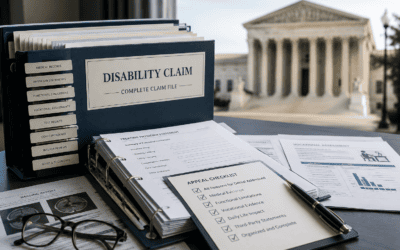
The ERISA “Administrative” Record: How to Build the File That Wins Your Disability Appeal
If your long-term disability benefit claim was just denied, your first instinct is probably to gather more records and send them to the insurance company with the expectation that a little more evidence will suffice. That instinct is the right one, but the stakes are...