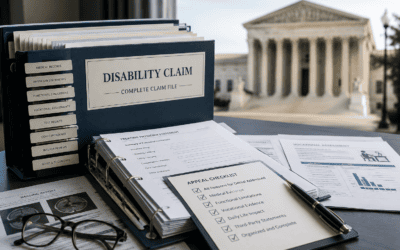

If your disability insurance claim has been denied, additional reports from your treating doctor may not be enough to overturn the denial, and you may need to retain the services of one or more outside experts. The nature and quality of expert input may determine whether you win or lose your claim. Understanding how to strategically use expert evidence is crucial for building a persuasive record that stands up in court.
Why Expert Testimony Matters in Disability Appeals
Insurance companies frequently discount the opinions of treating physicians, arguing the treating doctors are biased toward their patients or lack objectivity. Such skepticism became legally sanctioned in the landmark Supreme Court case of Black & Decker Disability Plan v. Nord (2003), which held that treating physicians are not entitled to receive deference by insurers in ERISA-governed disability claims.
The Nord decision fundamentally changed the disability benefit landscape. Courts now evaluate treating doctors‘ opinions alongside insurer-hired reviewers. They weigh each based on the length of the treatment relationship, the thoroughness of examinations, the quality of supporting documentation, and a complete explanation of the doctors’ conclusions. This means your treating physician’s support, while valuable, may need to be reinforced with robust, well-documented expert reports that directly address the insurer’s stated reasons for denial.
Without strong expert testimony, your appeal faces an uphill battle. Insurers know that many claimants only their treating doctor’s records or a cursory note stating their patient is disabled. This makes it easier to uphold denials based on conflicting opinions from their own consultants. Expert testimony levels the playing field by providing detailed, credible evidence that directly rebuts the insurer’s position.
Types of Experts That Strengthen a Disability Insurance Appeal
Every case is unique, and not all claims require expert input beyond what the treating doctor can offer. But when it is needed, selecting the right experts for your specific condition and occupation is essential for a successful appeal.
Neuropsychologists:
For claims involving cognitive impairments due to neurological illness or traumatic brain injury, neuropsychological testing provides objective, quantifiable evidence of functional deficits. These experts conduct standardized tests that measure memory, processing speed, attention, concentration, executive function, and other cognitive abilities that may prevent you from performing your occupation.
Related Article: What Is a Neuropsychological Evaluation in a Disability Claim?Functional Testing Experts:
Functional Capacity Evaluations (FCE) and Cardiopulmonary Exercise Testing (CPET) provide objective measurements of physical capabilities. An FCE, for example, documents what activities you can or cannot perform, for how long, and with what level of exertion. This provides critical evidence when insurers claim you can work despite chronic pain or physical limitations.
Related Article: How a Functional Capacity Evaluation Can Help Prove Your Disability?Vocational Rehabilitation Consultants:
These professionals conduct Transferable Skills Analyses (TSA) and earnings capacity assessments. They evaluate whether your medical findings preclude you from returning to work in your own occupation or profession. They also assess whether prior education, training, and work experience realistically translate to other occupations.
Medical Specialists:
In rare instances, seeking additional medical opinions from board-certified physicians in the relevant specialty can provide detailed assessments of diagnosis, treatment, prognosis, and functional limitations. Independent medical specialists can also identify and address weaknesses in the insurer’s medical review..
Each type of expert serves a specific purpose in your appeal. An attorney with a spinal injury might need a neurosurgeon’s opinion, an orthopedic opinion, an FCE, and a vocational expert to prove they cannot handle complex legal matters due to diminished exertional capacity and pain. A software engineer with cognitive deficits from long COVID might require a neuropsychologist and vocational rehabilitation consultant.
Building a Strong Administrative Record with Expert Evidence
ERISA disability claim appeals operate under strict procedural rules that make what goes into the claim record critically important. Once your case reaches federal court, judges typically limit their review to evidence that was placed in the record during the claim and appeal. New evidence discovered after the appeal deadline generally cannot be considered.
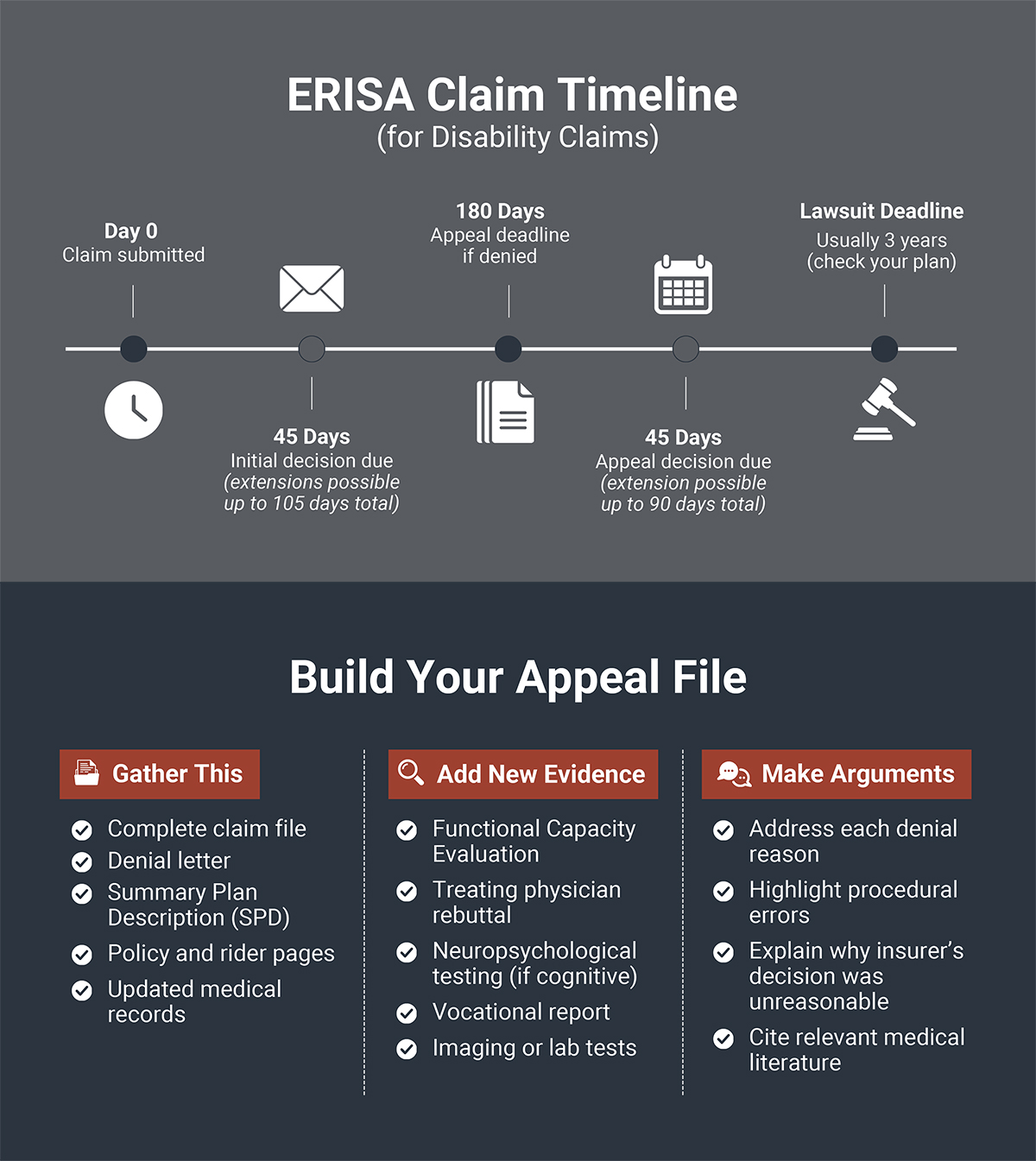
This limitation makes the appeal stage your one opportunity to build a complete, persuasive record. Every expert report, test result, and medical opinion that supports your claim must be submitted before the appeal deadline. This is usually 180 days from the denial notice.
The 2018 Department of Labor regulations strengthened claimants’ rights during appeals. Those regulations require insurers to institute measures aimed at ensuring the independence of medical and vocational reviewers. They also give claimants the right to review and respond to any new evidence or rationale the insurer obtains during the appeal. This means if the insurer commissions a new medical review during your appeal, you must be provided with a copy. You also have an opportunity to respond before a final decision is made.
Building a strong record means anticipating the insurer’s arguments and proactively addressing them. If the insurer’ obtained a vocational review, it is usually incumbent on the claimant to obtain one as well.
The consequences of an incomplete record are severe. Courts have repeatedly affirmed disability claim denials where claimants failed to submit persuasive expert evidence during the appeal, even when compelling evidence existed. Conversely, a well-built administrative record often leads to voluntary reversals by insurers or can lead to a favorable court ruling.
Case Spotlights: When Expert Testimony Made the Difference
Real-world cases demonstrate the decisive impact of expert testimony in disability appeals.
In several DeBofsky Law victories, the court found neuropsychological evaluations, functional capacity evaluations and vocational assessments, along with thorough treating doctors’ records and reports, more persuasive than file reviews performed by non-examining doctors. Obtaining and submitting such evidence has made the difference between success and failure.
Practical Tips for Using Experts in Disability Insurance Appeals
Selecting and using expert witnesses effectively requires strategic planning and attention to detail.
Choose Credible, Independent Experts:
Select experts who are board-certified or appropriately licensed in the relevant specialty, have strong credentials, and who can provide clear, well-reasoned reports. Independence matters, experts with no financial ties to either side carry more credibility than those who regularly consult for insurers.
Time Your Expert Reports Strategically:
Commission expert evaluations early in the appeal process, ideally within the first 60-90 days after denial. This allows time for scheduling examinations if needed, obtaining medical records, preparing comprehensive reports, and responding to any new evidence the insurer submits. Never wait until the last minute before the 180-day deadline.
Ensure Reports Address the Denial:
Your expert reports must directly rebut the specific reasons stated in the denial letter. If the insurer claimed lack of objective findings, the report should document relevant objective test results. If the insurance company questioned functional limitations, the report should detail exactly what activities you cannot perform and why. Generic support is insufficient; experts must engage with the insurer’s arguments.
Use Experts to Rebut Insurer Reviewers:
When the insurer submits peer reviews or surveillance reports, commission rebuttal reports from your experts. A treating specialist can explain why the peer reviewer’s conclusions are flawed. A functional capacity evaluator can demonstrate that surveillance footage showing limited activity has limited or no value whatsoever in proving work capacity.
These practical steps, informed by decades of disability appeal experience, maximize the persuasive impact of expert testimony and significantly improve your chances of reversal.
Expert Testimony in Disability Insurance Appeals: Frequently Asked Questions
What types of expert testimony strengthen a disability insurance appeal most?
The most persuasive expert testimony combines medical specialists who have examined you, functional testing that objectively documents your limitations, and vocational experts who analyze your specific occupation and transferable skills. The strongest appeals typically include multiple types of experts who provide complementary evidence addressing different aspects of the insurer’s denial.
When should I get an expert report during the appeal process?
Commission expert reports as early as possible in the appeal process, ideally within 60-90 days of receiving your denial notice. This timeline allows for scheduling examinations, preparing thorough reports, and responding to any new evidence the insurer submits during the appeal. Given the typical 180-day ERISA appeal deadline, starting early is essential.
Can my treating physician’s opinion alone be enough to win an appeal?
While treating physicians’ opinions are valuable, they may not be enough after the Nord decision. Courts no longer give automatic deference to treating doctors, instead weighing their opinions against insurer reviewers. Strengthening your record with independent medical specialists, functional testing, and vocational analysis significantly improves your chances of success.
How long do I have to appeal a disability insurance denial under ERISA?
ERISA-governed plans typically provide 180 days from the denial notice to file your appeal. This deadline is strictly enforced—missing it can permanently forfeit your right to appeal. Check your denial letter and plan documents immediately to confirm your specific deadline.
Next Steps if Your Disability Claim Has Been Denied
Time is critical when appealing a disability insurance denial. The 180-day ERISA appeal deadline passes quickly, and building a strong record with expert testimony requires careful planning and execution. Delaying your appeal risks losing your one opportunity to submit the evidence needed to overturn the denial.
If your claim has been denied, consulting with an experienced disability attorney immediately protects your rights and ensures your appeal includes the expert testimony necessary for success. DeBofsky Law has decades of experience strategically using expert evidence to win disability appeals for professionals and skilled workers.
Don’t risk missing your chance to strengthen your record. If your disability claim has been denied, contact DeBofsky Law today. Our attorneys know how to use expert testimony to maximize your success.